


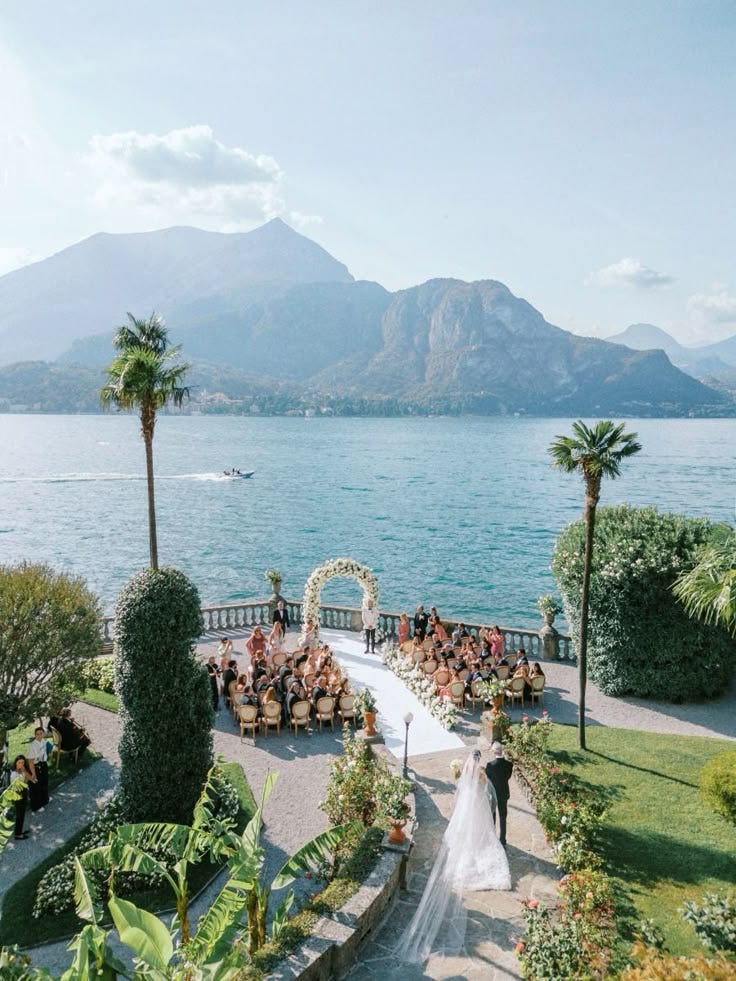
If you’ve just got engaged, you’ve either instantly or somewhere between your fifth venue tour and your tenth Pinterest board, started to wonder: what if we just got married somewhere beautiful and simple - away from it all?
It’s a thought that visits every couple at least once.
Maybe it’s the fantasy of sunset vows on the Amalfi Coast, or barefoot dancing under palm trees in Mexico. Maybe it’s about intimacy - a smaller guest list, fewer expectations, more meaning.
But destination weddings aren’t just about postcards and sea views. They’re about pace, intention, and the kind of experience you want to give the people who matter most.
If you’re torn between staying local or flying somewhere new, this is the guide that cuts through the noise. The practical, emotional, and financial truths that make the difference - told like it really is.
the myth of “getting away”
Let’s start with the biggest misconception: a destination wedding doesn’t mean easier or less planning.
Yes, you might be skipping the local politics of seating Aunt Karen next to your mum’s coworker. But what you gain in simplicity, you trade for logistics - time zones, travel, paperwork, weather, suppliers who don’t speak your language, and guests who will ask “should we stay three nights or five?” on repeat.
But that doesn’t make it a bad choice.
It just means the reason for doing it has to be deeper than “it’ll be easier.”
The best destination weddings aren’t about escape. They’re about immersion.
They take your guests somewhere new - physically and emotionally - and make it feel like home for a few days.
what destination weddings do best
When they’re done right, destination weddings have a kind of alchemy local ones can’t touch.
1. They stretch time.
A traditional wedding is one day that rushes by in a blur. A destination wedding is three to five days of slow build-up and soft landings - welcome dinners, beach days, morning-after brunches.
You actually see your guests. You have conversations. You remember faces, not just flashes.
2. They create shared memories, not just attendance.
Travel bonds people. Your guests aren’t just showing up - they’re journeying with you.
They’ll remember the night before the wedding as much as the day itself: the laughter over pasta, the swim that turned into sunset cocktails.
3. They focus the guest list.
Destination weddings naturally filter out the “obligations.”
You don’t have to invite your boss or your neighbour’s daughter.
The people who come really want to be there - and that changes the entire energy.
4. They create calm through distance.
When you get married abroad, you can’t micro-manage every detail.
You’re forced to let go - to trust your planner, your venue, and the process.
Paradoxically, that detachment often brings more peace.
what local weddings do better
But the truth works both ways - local weddings carry a comfort destination weddings can’t always replicate.
1. They’re accessible and inclusive.
Local weddings let everyone attend - especially older relatives, new parents, or anyone who can’t travel easily.
There’s less pressure, fewer flights, and more familiarity.
2. They can stretch your budget further.
The same budget that covers 30 guests abroad could cover 120 locally.
If you dream of a large party, full décor, and a big energy crowd, a local wedding delivers more “wow” for your pound.
3. They give you control.
When your suppliers are local, you can meet them in person, visit the venue multiple times, tweak the details.
If you’re the kind of couple who thrives on hands-on planning, staying local gives you that creative control.
4. They root you in place and memory.
Getting married near home carries its own kind of magic - the sense of familiarity, family, and legacy.
The streets you drive past later won’t just be roads - they’ll hold echoes of your wedding day.
the money conversation (and why it’s not so simple)
Here’s where couples get tripped up: thinking destination weddings are automatically cheaper.
Yes, they can be - especially if you’re planning a small group in a country with lower costs. But once you add accommodation, group meals, décor imports, and travel for suppliers, the savings often vanish.
The real difference is where the money goes.
In a local wedding, most of your spend goes into one day - the venue, catering, entertainment.
In a destination wedding, the spend spreads across the experience.
You’re paying for connection - multiple events, shared villas, sunsets with your people.
So instead of asking “which is cheaper?”, ask:
👉 Which way of spending money aligns with what we value most?
If you’d rather have three days of deep, relaxed time with 40 guests than one glamorous day with 200, your answer might already be clear.
the emotional layer no one talks about
Planning a destination wedding is not just about logistics - it’s about emotional energy.
When you plan locally, you’re surrounded by your support system. You can drop into your florist’s shop, swing by the venue, or lean on family for help.
When you plan abroad, even with a planner, you’re often alone in your decision-making. You’re leading something across borders. It takes a certain mindset - flexible, intuitive, calm under uncertainty.
And then there’s the emotional trade-off:
You’ll likely have fewer people there.
You might not get that “full room” feeling.
But what you gain is intimacy - the ability to look around at dinner and know everyone by name. To feel seen by every guest there.
That’s something local weddings can’t always offer.
how to know which one fits you
If you’re someone who wants your wedding to feel like a long, relaxed getaway - a few days of shared meals, slow mornings, and real time with your favourite people - you may be naturally suited to a destination wedding.
Couples who value intimacy over headcount, who love adventure, and who don’t mind letting go of a bit of control tend to thrive in destination settings.
But if you feel stressed at the thought of coordinating travel, or if having all your loved ones there (especially older relatives, extended family, or friends who can’t travel easily) is important to you, a local wedding will likely feel more grounded.
Couples who enjoy hands-on planning, want a bigger guest list, or prefer familiarity and accessibility often find that staying close to home gives them more comfort, flexibility, and budget to play with.
Ask yourself these questions:
Do we want our wedding to unfold over several days, or does one big moment feel right?
Are we excited by the idea of travel, or does it feel like pressure?
Would we rather have a small, intimate group - or a full room of everyone we love?
Do we enjoy the idea of letting go and trusting a planner abroad, or do we want to be more involved in every detail?
Is it important that older family members or guests with constraints can attend easily?
Are we happier investing in an experience for 30–50 people, or a single-day celebration for 100–200?
As you answer, you’ll notice you naturally lean one way.
The right choice is the one that feels like an extension of your relationship - not a trend, not a pressure, not a performance.
Just what feels like you.
the planning mindset for destination weddings
If you’re leaning towards “away,” here’s what seasoned planners want you to know:
1. Hire a local planner (not just a venue coordinator).
A venue manager will handle their property - a planner will handle your experience.
They’ll know trusted suppliers, legal paperwork, and local timing quirks (“sunset’s at 8:42, but light drops by 8:25”).
2. Visit once, then let go.
If possible, do one site visit - meet your vendors, see the light, taste the food.
After that, don’t micromanage via email. Trust the experts you hired.
3. Plan fewer, better moments.
Destination weddings don’t need constant entertainment.
A welcome dinner, a relaxed wedding day, and a farewell brunch are plenty. Guests remember quality over activity.
4. Communicate clearly and early.
Send save-the-dates 9–12 months ahead. Include travel tips, dress codes, and group rates.
Clarity prevents chaos - and makes guests feel taken care of.
5. Remember the weather (and the locals).
Your dream season might be their off-season - or vice versa.
Ask about heat, rain, wind, and local holidays before setting a date.
6. Build in recovery time.
If you can, stay two extra nights after guests leave.
Those quiet days - when it’s just you two, finally still - often become the real honeymoon.
if you stay local - make it feel just as intentional
Choosing home doesn’t mean your wedding can’t feel like an escape.
You can borrow the best parts of destination weddings without leaving the country.
1. Create a “mini destination” feel.
Pick a countryside venue, seaside town, or estate that feels a world away.
Encourage guests to stay overnight.
Turn it into a weekend - rehearsal dinner, late breakfast, slow check-out.
2. Design through experience, not excess.
Think in senses - how the evening light will feel, what scent will linger, what guests will hear between speeches.
That mindfulness makes any space feel transportive.
3. Add depth with storytelling.
Bring in local touches: regional food, family recipes, meaningful music.
The sense of place doesn’t have to be abroad - it just has to be personal.
4. Let go of the clock.
Borrow the destination wedding mindset - slower pacing, longer conversations, fewer formalities.
A wedding that breathes feels luxurious anywhere.
the future of weddings: connection over geography
Here’s what the industry is quietly noticing: couples aren’t choosing between “local” or “destination” anymore. They’re choosing between transactional and transformational.
Whether it’s 40 people in Tuscany or 150 in your hometown, the goal has shifted. Couples want depth, not scale. Meaning, not perfection.
That’s why we’re seeing “semi-destination” weddings rise - UK countryside weekends, coastal escapes, private estates that feel like retreats.
It’s less about where you are and more about how your guests feel while they’re there.
stories from the aisle
When planners talk about their favourite weddings, they don’t mention budgets or backdrops - they talk about energy.
Like the Lake Como wedding where the couple invited 20 guests, all stayed in one villa, and everyone cried during the after-dinner karaoke.
Or the countryside wedding in Yorkshire where the couple brought in their favourite wine, served pie and mash, and turned the barn into a candlelit dinner that felt like a warm hug.
Both were perfect, for opposite reasons.
Because the magic wasn’t in the setting. It was in the intention.
so, what’s the answer?
If you’re deciding between a local or destination wedding, strip the question down to this:
“Do we want a day that’s familiar and full, or a few days that are intimate and immersive?”
Neither is better - they’re just different love languages.
One celebrates belonging.
The other celebrates becoming.
The right choice is the one that feels like a natural extension of your relationship - not what looks best on Instagram.
Because years from now, when you think back on it, you won’t remember whether you got married under olive trees or oak beams.
You’ll remember how it felt: the laughter, the warmth, the stillness that made it all real.
the takeaway
A destination wedding doesn’t have to mean far - and a local wedding doesn’t have to mean simple.
What matters most is space: space to connect, to feel, to breathe.
Whether you’re clinking glasses by the sea or under the same sky you grew up beneath - if the day feels like you, it’s already perfect.